Learning Outcomes
i. Identify and differentiate among various animal body plans, including radial symmetry, bilateral symmetry, and segmentation.
ii. Explain how body plans influence the organization of internal organs, movement, and behavior in animals.
iii. Understand the developmental processes that give rise to different animal body plans, including gastrulation and organogenesis.
iv. Appreciate the diversity of developmental strategies employed by animals for growth and reproduction.
i. Body Plans: Shaping the Animal Kingdom
The animal kingdom exhibits a remarkable diversity of forms and structures, each with a unique body plan that reflects its evolutionary history and adaptation to its environment. Body plans are the overall architectural designs of animal bodies, encompassing the arrangement of their organs, limbs, and other anatomical features.
ii. Radial Symmetry: A Circular Organization
Radial symmetry is a body plan characterized by a circular or rotational arrangement of parts around a central axis. Animals with radial symmetry, such as cnidarians (e.g., jellyfish, anemones, corals) and echinoderms (e.g., starfish, sea urchins, sand dollars), often exhibit a sessile lifestyle, attached to a substrate and lacking specialized locomotion.
iii. Bilateral Symmetry: A Two-Sided Design
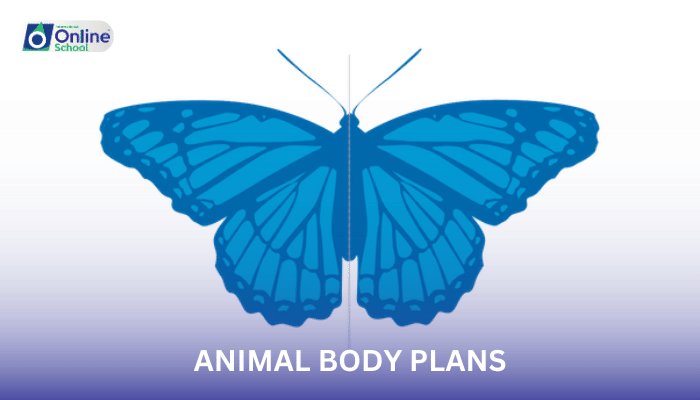
Bilateral symmetry is a body plan characterized by a division of the body into two mirror-image halves along a longitudinal axis. Animals with bilateral symmetry, such as vertebrates (e.g., fish, amphibians, reptiles, birds, mammals), insects, and many other groups, are often mobile and exhibit more complex organ systems and behaviors.
iv. Segmentation: A Modular Approach
Segmentation is a feature of some body plans, where the body is divided into repeated units or segments. Segmentation allows for increased flexibility, movement, and specialization of body parts. Animals with segmentation include annelids (e.g., earthworms, leeches), arthropods (e.g., insects, spiders, crustaceans), and vertebrates (e.g., fish, mammals).
v. From Embryo to Adult: The Wonders of Development
Animal development is a complex and fascinating process that transforms a single fertilized egg into a fully formed adult organism. This process involves a series of coordinated events, including cell division, differentiation, and morphogenesis.
vi. Gastrulation: Laying the Foundation
Gastrulation is a critical step in animal development, where the basic embryonic layers, the ectoderm, mesoderm, and endoderm, are formed. These layers give rise to the different tissues and organs of the adult organism.
vii. Organogenesis: Shaping the Body
Organogenesis is the process by which the embryonic layers develop into specific organs and structures. This involves cell migration, cell interaction, and gene expression.
viii. Developmental Strategies: Diversity in Reproduction and Growth
Animals exhibit a wide range of developmental strategies, reflecting their adaptations to different environments and reproductive modes. Some animals, such as cnidarians and some insects, undergo metamorphosis, a dramatic change in body form and physiology during their development. Others, like vertebrates, develop gradually from fertilized egg to adult without a distinct metamorphic stage.
Animal body plans and development are fundamental concepts in biology, providing insights into the evolutionary history, diversity, and adaptations of animals. Understanding these concepts allows us to appreciate the remarkable complexity and beauty of the animal kingdom.
